Expertise
Connected & autonomous vehicle security
Making the messages that move safety-critical vehicles trustworthy — from V2X communications to cloud-assisted autonomy.
The problem
Where the risk really sits
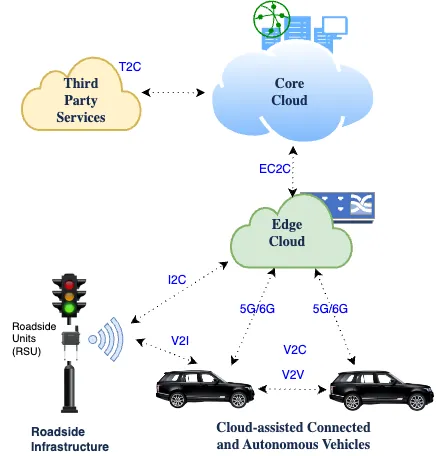
Connected and autonomous vehicles depend on a constant stream of Cooperative Awareness Messages (CAMs) shared between vehicles, roadside units and the cloud. An adversary who injects false position or motion data into that stream can undermine safety-critical decisions — and conventional perimeter security does not see it.
What DeTrust does
DeTrust threat-models V2X and cloud-assisted vehicle systems and designs detection for adversarial messages — grounded in doctoral research and a national funded programme, not a product datasheet.
The differentiator
Advice built by someone who engineered the methods
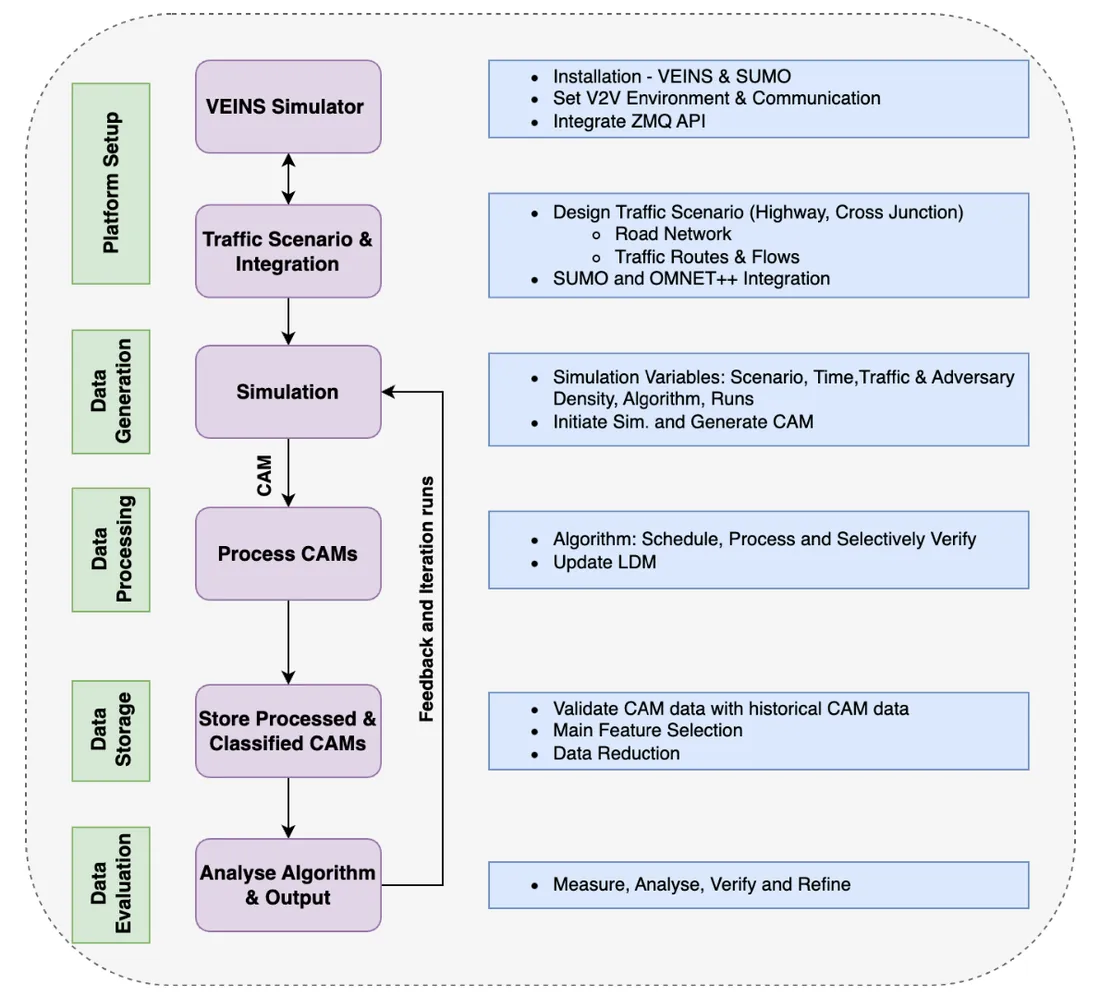
- Original detection methods — the Kalman-Cuckoo Filter and the Bounding Box Algorithm — for real-time verification and spatial anomaly detection of malicious position claims in V2X CAMs (PhD / CARMA; IEEE TITS submission).
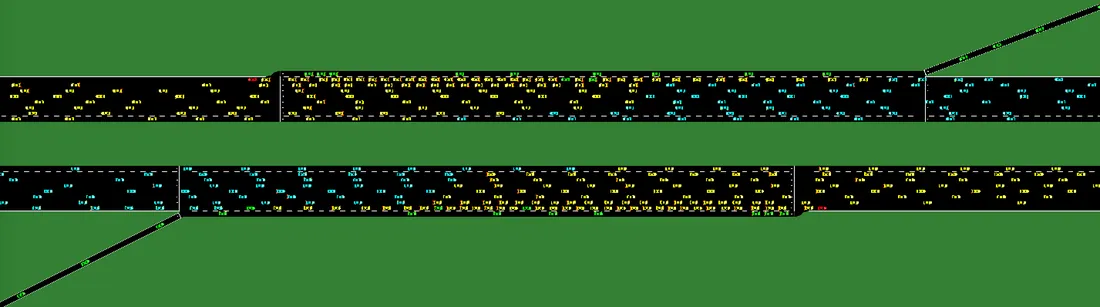
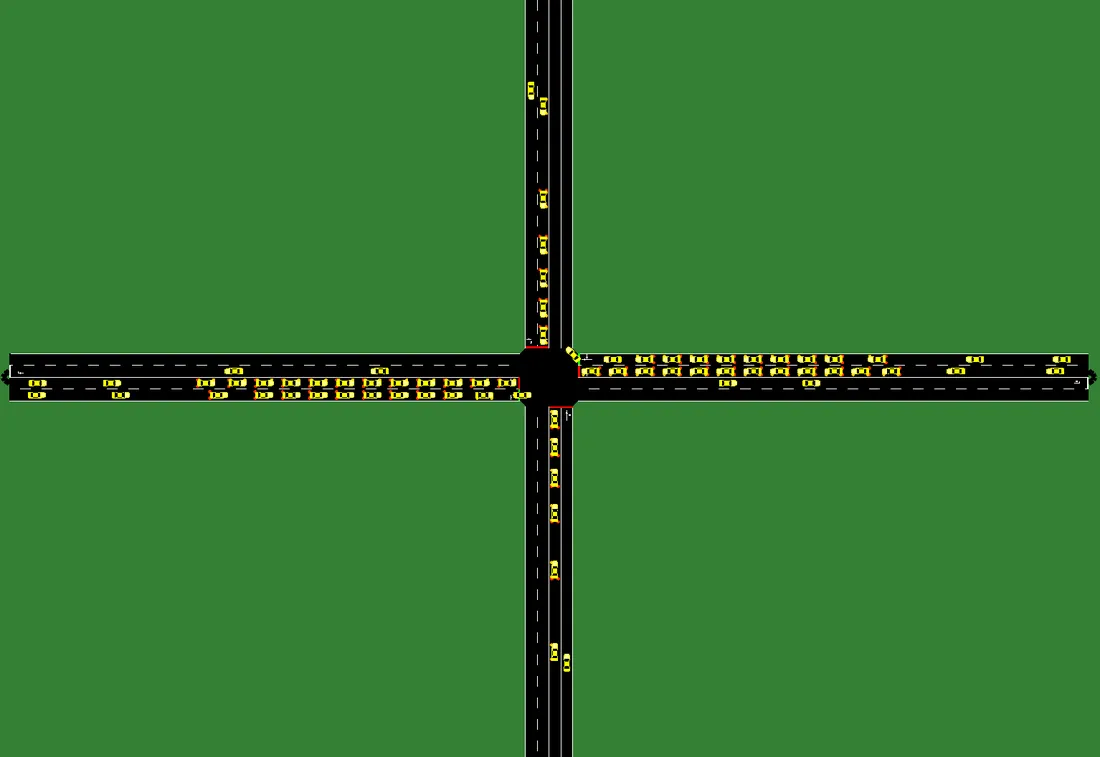
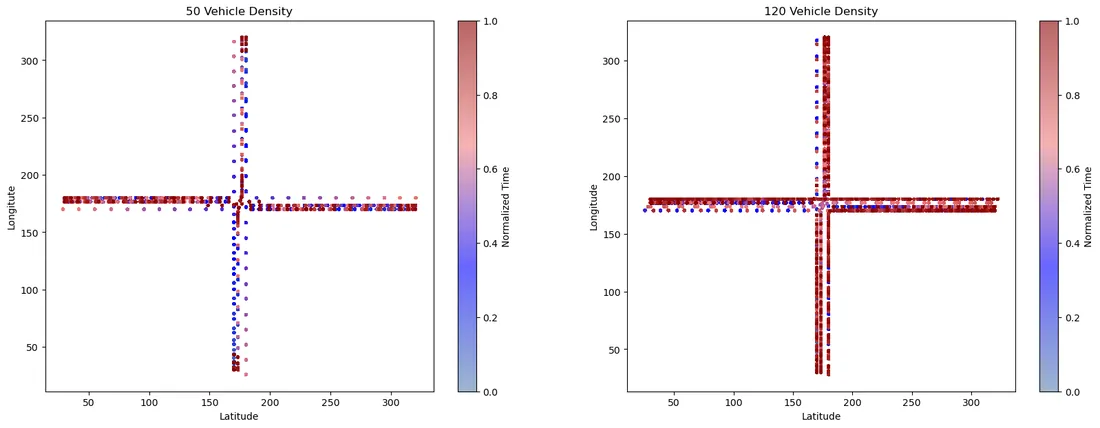
- Adversarial testing across five attack types — synthetic-data injection and constant/random position and offset spoofing — simulated in SUMO + VEINS at highway and intersection scale.
- Academic-expert input to the UK Information Commissioner's Office on connected-vehicle data governance (national report, 2026).
Research behind this domain
Published, peer-reviewed evidence
The detection methods, threat models and human-factors work behind DeTrust's connected-vehicle assessments — each peer-reviewed and publicly verifiable.
- Securing Cloud-Assisted Connected & Autonomous Vehicles: An In-Depth Threat Analysis and Risk Assessment · Sensors, 2024A STRIDE + DREAD + TARA threat analysis of cloud-assisted CAVs — where existing risk methods fall short and how to close the gaps.
- A Comprehensive Survey of Threats in Platooning · Information, 2024A catalogue of attack vectors and trust domains across the connected-vehicle platooning stack.
- TARA+: Controllability-Aware Threat Analysis and Risk Assessment for L3 Automated Driving · IEEE IV, 2019A controllability-aware TARA method that quantifies risk by likelihood and impact for Level-3 automated driving.
- Key Security Challenges for Cloud-Assisted Connected and Autonomous Vehicles · IET Living in the IoT, 2019The attack taxonomy and adaptive-security framing for cloud-assisted CAVs.
- Human Factors for Vehicle Platooning: A Review · IET CADE, 2021How drivers and the public accept and trust vehicle platooning — the human factors behind adoption.
- Security-Minded Verification of Cooperative Awareness Messages · IEEE TDSC, 2023Combining formal verification with threat modelling to check V2X Cooperative Awareness Messages against adversaries.
- A Comparative Evaluation of Pseudonym-Based Anonymisation for Connected Vehicles · Frontiers in Future Transportation, 2025Balancing privacy and usability in pseudonym schemes for connected vehicles.
- Edge Computing for Message Prioritisation in Connected Vehicles · IEEE, 2020Using edge computing to prioritise safety-critical messages in connected vehicles.
- A Threat-Based Approach to Computational Offloading for Connected & Autonomous Vehicles · ACM, 2017Prioritising computational offloading in IoT/ITS by modelled risk.
From the research programme
Illustrations from the research programme
Related expertise
Intelligence-driven. Evidence first.
Tell the founder what you're working on. Every enquiry is read and answered personally.